

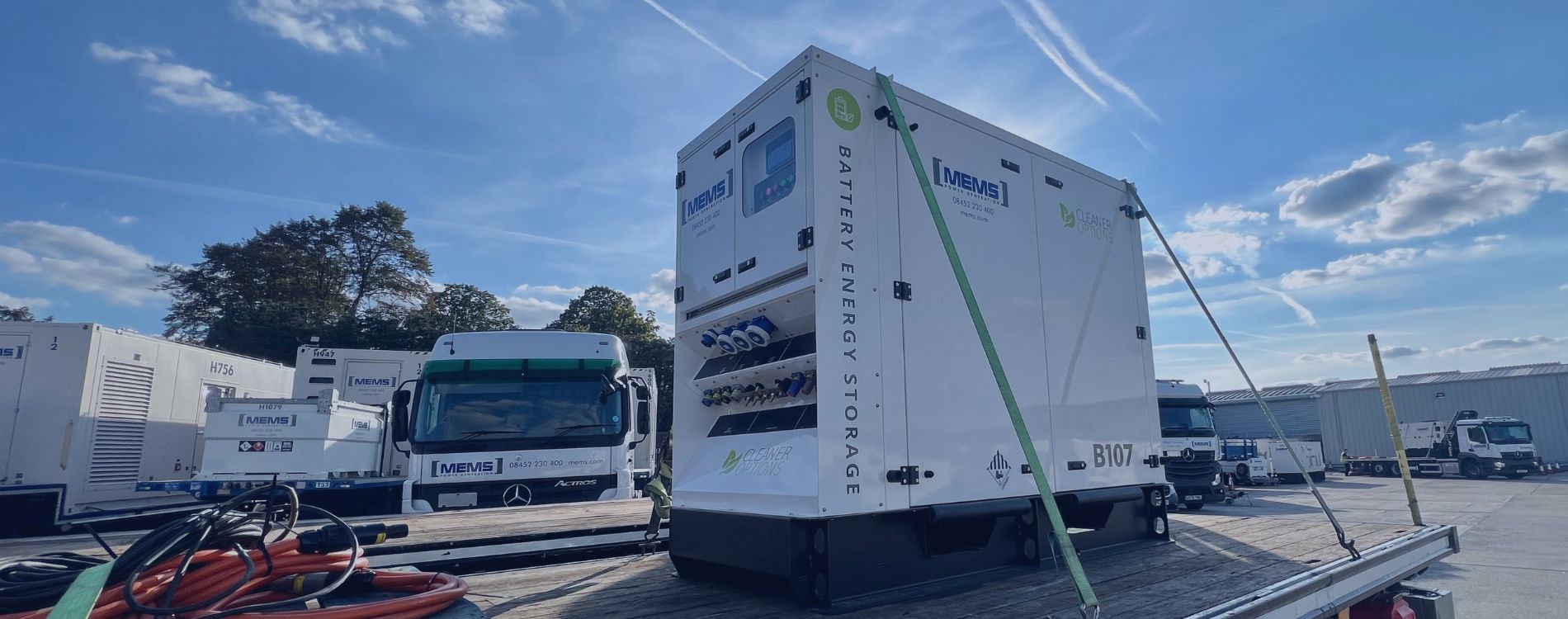

Battery Energy Storage Systems (BESS) for Temporary Power – Reduce Emissions, Fuel Use and Noise
Why Use Battery Storage with MEMS Generators
MEMS supplies Battery Energy Storage Systems designed for temporary power applications. These systems reduce generator fuel use, lower emissions, and minimise site noise.
Our plug-and-play battery storage systems offer fully integrated energy storage solutions that optimise system efficiency and effectiveness. Our battery energy storage systems are expertly manufactured for optimal performance, reducing carbon footprint and energy costs, and supporting businesses to become more environmentally conscious.
Battery Energy Storage technologies are becoming increasingly popular as an eco-friendly alternative to traditional temporary backup power sources, storing energy generated for later use.

MEMS Battery Storage System Datasheets:
45 kVA / 45 kWh BES
Our 45 kVA batteries can decrease generator run time, reducing fuel consumption and noise on site.
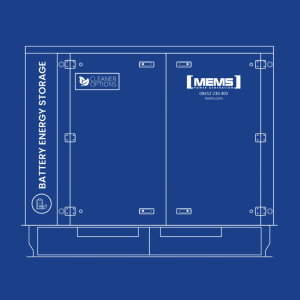
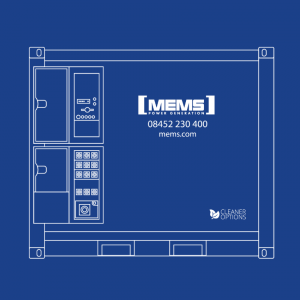
318 kVA / 422 kWh BES
The 422 kWh consists of a 10ft. container, which stores lithium-ion batteries and results in a total storage capacity of 422 kWh.
Reduce Environmental Impact and Costs
Power needs vary greatly in many industries, depending on the time of day and type of industry. During quieter hours, when the need to generate electricity and power requirements decrease, BES units are an efficient solution that can be pre-programmed to provide emission-free power during specified hours, reducing negative environmental impacts caused by lightly loaded generator use. Our bespoke control system can monitor power demand, manage battery charging and discharging, and control the generator, providing a fully automated and systematic power supply solution.
With MEMS Battery Energy Storage, businesses can achieve their sustainability goals and benefit from a cost-effective, efficient, and environmentally conscious energy solution on a large scale.
Battery Energy Storage Systems FAQs
How do battery energy storage systems work?
BESS units store energy for use when demand changes. Electrical energy is stored within the system and released when needed to support temporary power.
During low demand periods, such as overnight operation, excess energy is stored instead of running generators inefficiently. When demand increases, the stored energy is discharged to maintain a stable power supply. This improves efficiency and reduces unnecessary fuel use.
BESS systems use bidirectional inverters to control charging and discharging.
During charging, the inverter converts AC power into DC to store energy in the batteries. During discharge, it operates in reverse, converting stored DC energy back into AC to supply power to the load.
What are the Benefits of BES units?
Enhanced generator efficiency
BESS units reduce the need for generators to run during low load periods, such as overnight. This limits inefficient running, lowers fuel consumption, and improves overall performance.
Reduced CO2 and NOx emissions
By cutting generator runtime, BESS units lower carbon emissions and reduce harmful pollutants such as CO2 and NOx.
Lower noise levels
BESS units operate with minimal noise, making them suitable for environments where noise control is important, including facilities and critical sites.
What sectors benefit most from BESS?
BESS supports a range of sectors where reliable, efficient power is critical.
Manufacturing
Maintains consistent power during variable demand and reduces reliance on continuous generator use.
Data centres
Supports stable power delivery, improves resilience, and helps manage load fluctuations without disruption.
Defence
Provides dependable, low-noise power in secure and remote environments where operational continuity is essential.
Telecommunications
Maintains network uptime and supports backup power requirements across distributed infrastructure.
Facilities and critical infrastructure
Ensures continuity of operations while reducing fuel use, emissions, and noise in sensitive environments.
MEMS CLEANER OPTIONS
HIRE CLEAN, MAKE AN IMPACT: GO GREEN WITH CLEANER OPTIONS.
We continuously improve our technology and services to help businesses transition to renewable energy and a greener future. MEMS provides cleaner power solutions that cut emissions and boost efficiency. Our fleet includes Stage V compliant generators compatible with renewable and alternative fuels, along with hybrid and battery-supported systems that reduce fuel use on-site. We remain focused on developing low-carbon solutions that help customers meet sustainability goals without sacrificing performance.
Learn more about Cleaner Options