


Meeting demand securely depends on more than the total generation capacity connected to the electricity system.
What the 23rd June grid event reveals about energy resilience in Great Britain
The events of 23rd June 2026 highlighted the difference between total generation capacity and the electricity available to meet demand under real operating conditions. Availability, network capacity, market conditions and the speed of the operational response all matter.
Critical sites face the same issue on a smaller scale. Owning or hiring a generator, battery or grid connection does not settle the question. The response also relies on suitable connections, clear access, transport, fuel, monitoring and people who know what to do.
Ofgem is investigating what happened during the June heat event. No blackout occurred and, according to NESO, no customer demand was disconnected. For now, the published evidence supports a careful examination of the system conditions. It does not support a verdict on how close the country came to a blackout or whether every security requirement was met.
What happened during the 23rd June grid event?
Great Britain and much of Europe experienced sustained extreme heat during the week beginning 22nd June. Ofgem records that, on 23rd June, NESO issued an Emergency Instruction concerning the interconnector with the Netherlands and requested Emergency Assistance through the interconnector with France. Electricity Margin Notices followed for 24th and 26th June.
NESO described the operational challenge as a difficult mix of low wind, reduced availability from gas generation, sustained high demand, adverse interconnector flows and network constraints. Its control room responded through market engagement, demand flexibility, reserve, trades with neighbouring system operators and instructions to interconnectors.
NESO recorded frequency between 49.66 Hz and 50.23 Hz across the week. Those figures sit within the stated statutory range of 49.5 Hz to 50.5 Hz. NESO also reported that voltage stayed within limits and that no lines or cables were overloaded.
IMPORTANT DISTINCTION | Frequency staying within statutory limits does not answer every question about system security. Ofgem is also reviewing constraint limits, N-1 compliance, control-room decisions, market actions and the relevant standards.
Ofgem’s wider regulatory review will look beyond those headline figures. It will reconstruct the circumstances, examine the system’s precise security position and test whether any rules or constraint limits were breached. No blackout occurred, and Ofgem has yet to reach a final determination. At the time of publication, it has not announced when its conclusions will be released.
Available capacity is not the same as usable power
A headline capacity figure answers a narrow question: how much generation or storage exists? In real time, several other conditions have to line up.
- Installed capacity. The generation or storage connected to the wider system.
- Physical availability. The equipment has to operate in the conditions at the time, allowing for outages and any heat-related reduction in output.
- Commercial availability. The market and operating arrangements have to make the capacity accessible when it is needed.
- Network deliverability. The transmission and distribution network has to carry the power to demand without exceeding thermal, voltage or stability limits.
- Operational flexibility. The resource has to respond quickly enough, sustain its output and follow control instructions.
- Contingency security. The system needs to remain secure if a credible fault or loss occurs, rather than merely balancing under the conditions already present.
A national total might look comfortable while the operating margin becomes tight. What matters in the control room is whether enough power is available in the right place, in the right form and soon enough to meet the need.
Weather, demand and forecasts interact
Extreme heat changes several variables together. Electricity demand shifts. Wind output sometimes drops. Solar generation falls with the daily cycle while evening demand remains high. Thermal generation and network equipment also behave differently as temperatures rise.
In its Summer Outlook 2026, NESO tested 30,000 combinations of weather, demand, conventional generation, wind, solar and interconnector availability. It found that low operational surplus would require several factors to coincide and judged the chance on any one day to be low. Events such as 23rd June show why operators still plan for those less likely combinations.
Ofgem’s review scope covers how accurately and how early demand, wind, solar, embedded generation, system margin and generation were forecast. Planned and unplanned outages also fall within the review, along with the way extreme heat featured in operational assumptions. Until the evidence is assembled, the weight attached to each factor remains uncertain.
An interconnector is
not a guaranteed import
Interconnectors link Great Britain to neighbouring electricity markets and provide useful flexibility. Their technical transfer capacity should not be read as a promise that a fixed amount of electricity will flow into Great Britain.
Flows reflect market schedules, price differences, available transfer capacity, conditions in neighbouring systems and real-time instructions. Their direction and volume sometimes shift quickly when a system is under pressure. NESO’s status report for 23rd June listed substantial interconnector capability and a partial outage on IFA. Ofgem’s review scope includes scheduled and actual flows, forecast accuracy, price differences and the timing of changes.
Access to another source is valuable. Resilience still depends on knowing when it will be available, on what terms and what happens if the expected flow changes.

The questions Ofgem is now examining
No single figure gives a complete account of 23rd June. Ofgem has asked NESO to build a detailed record covering:
- Demand, wind, solar, embedded generation, margin and generation forecasts, including the effect of extreme heat.
- Planned and unplanned outages, physical and commercial availability, and information available within the day.
- Schedules, actual flows, forecast movements, trading and emergency assistance.
- Operational decisions. Which actions were available, which were taken, when they happened and why.
- System security. Relevant standards, constraint limits, N-1 resilience and the consequences of operating outside normal limits.
- The quality of records, communications and evidence supporting decisions.
Ofgem’s terms of reference required NESO to submit a factual preliminary report to its Oversight Group by mid-August 2026. Ofgem said it would then review the findings, decide whether further work was needed and set a timetable for the final report. As of 21 September 2026, no final report appears on Ofgem’s public review pages.
What this means for critical sites
The 23rd June event occurred at transmission-system level. It does, though, offer useful lessons about the factors needed to maintain a secure and resilient electricity supply.
For critical sites, emergency power arrangements must work under real operating conditions. The equipment must support the required load, connect safely to the site and remain operational for the expected duration of an outage.
A technically sound plan should confirm:
- Which loads must remain operational and their electrical requirements.
- How temporary generation will connect to the site.
- What isolation, protection and switching arrangements are required.
- Whether equipment, cables and fuel deliveries have suitable access.
- How fuel use and replenishment will be managed during a prolonged outage.
- Who has authority to activate and manage the response.
- How the arrangements will be tested and reviewed.
How MEMS manages temporary power at site level
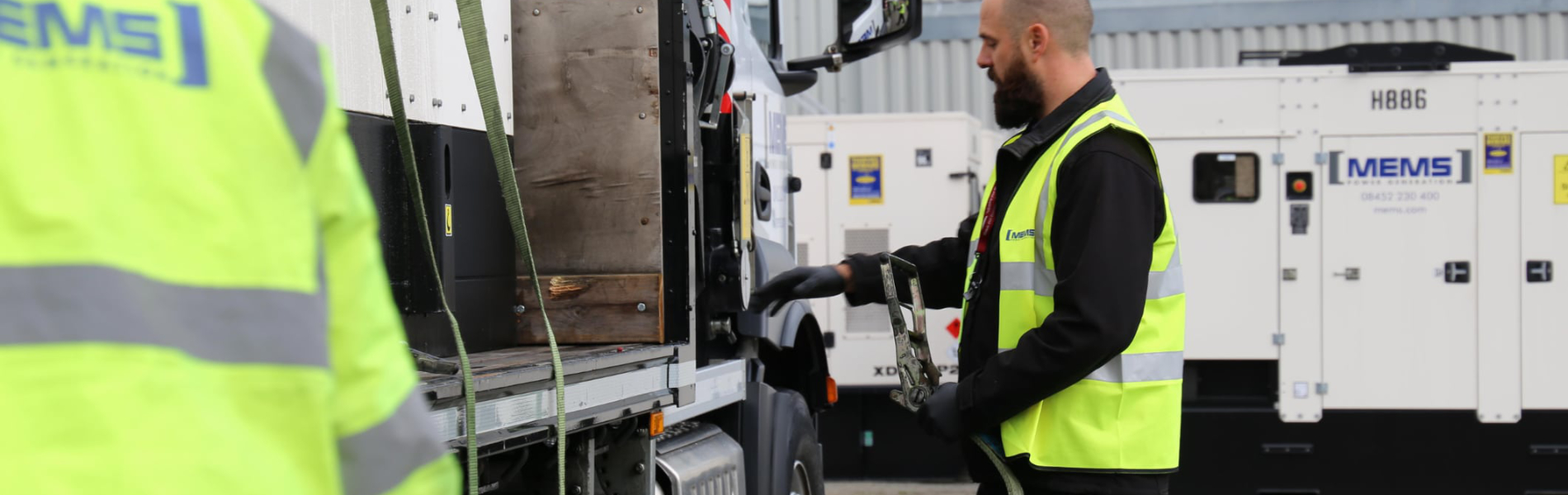
MEMS approaches temporary power as an operational service rather than an equipment drop. Depending on the site, the work covers system design, equipment selection, connection planning, in-house transport, installation, commissioning, fuel management, remote monitoring and support from the 24/7 staffed control room.
Where critical power is at risk, a documented MEMS disaster recovery planning process captures the technical, logistical and operational details before an incident. During a hire, MEMS Connect sends live information on load, fuel, location and equipment condition to the staffed MEMS control room.
Judge resilience where the power is used
Ofgem’s findings will give a fuller account of 23rd June. One practical point is already apparent. Installed capacity and usable power are not the same thing.
At a critical site, resilience rests on location, connection, timing, flexibility, information and control. The real test is whether the entire response works when conditions change, rather than whether a piece of equipment appears on an asset list.
Frequently asked questions
What is an Electricity Margin Notice?
NESO explains that an Electricity Margin Notice signals a tighter margin and asks market participants to identify further capacity for a set period. An EMN is not a power-cut warning and does not mean electricity supplies face an immediate risk.
Does high installed generation capacity guarantee energy resilience?
No. The capacity also has to be physically and commercially available, connected to the right part of the network, deliverable within operating limits and responsive at the right time. The system must also withstand credible faults.
What should a critical site review first?
Start with the critical load and connection strategy. Establish what must stay operational, the electrical requirements, connection point, isolation responsibilities, staff availability, site access, cable routes and likely operating duration. Those facts should drive the equipment choice.
|
Written by: |
Technical review: |
Published 20 August 2026 | Reviewed 21 September 2026
Related Reading
The Hidden Challenge of the UK Energy Transition
The UK’s energy transition depends on more than new generation and grid capacity. Temporary energy infrastructure helps keep critical services operational during upgrades, commissioning and planned outages.