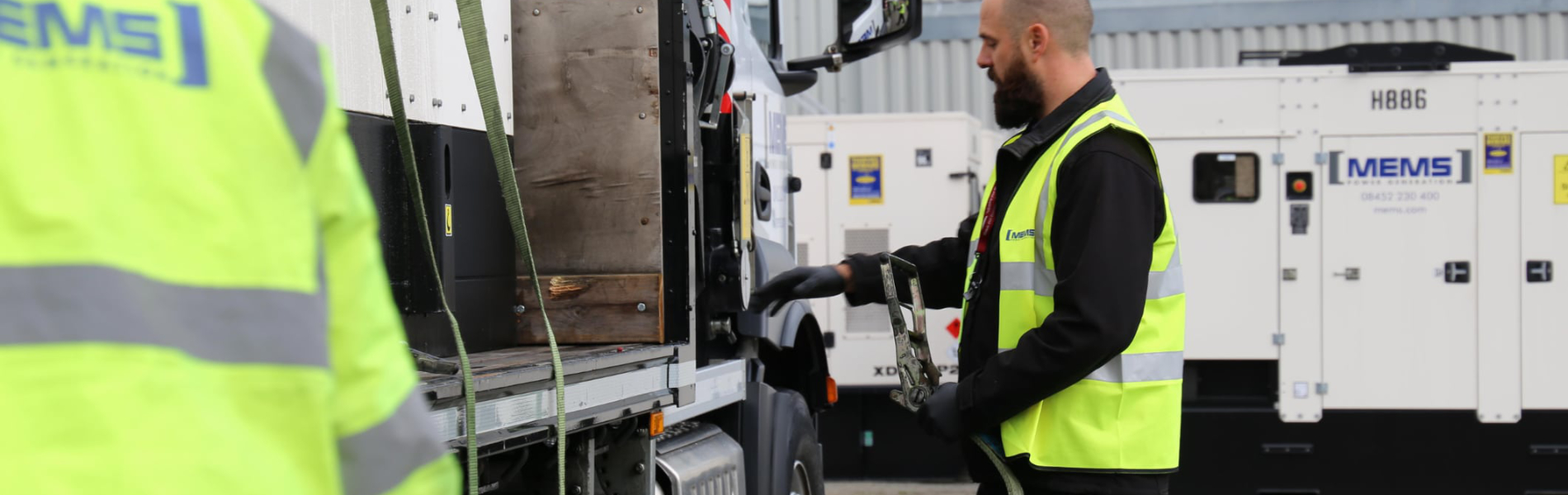

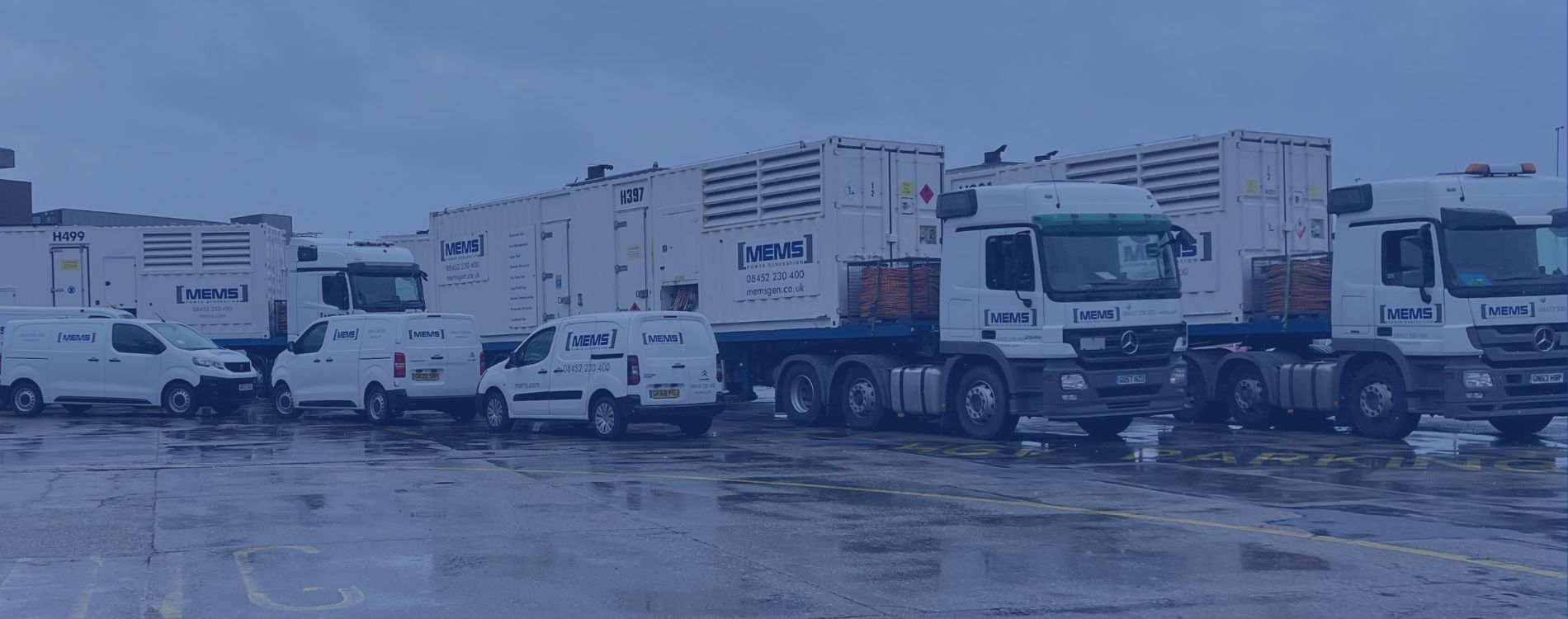

AI-led growth is outpacing supporting infrastructure. Temporary power for AI infrastructure is now critical as power becomes the primary constraint across UK infrastructure.
Power Demand Is No Longer Predictable

Temporary Power for AI Infrastructure Is Now the Defining Constraint
Energy availability is now the critical path. Projects may be ready to deploy but cannot proceed without secured power.
This requires a new approach to infrastructure planning. Power must be defined at the outset and aligned with delivery timelines, not left until the end.
MEMS addresses this shift by deploying temporary power solutions to maintain progress while grid infrastructure develops. Temporary power for AI infrastructure plays a critical role here, maintaining project timelines and reducing delays caused by grid limitations.
Backup Power Is No Longer Enough
Traditional backup systems were designed for infrequent outages and supported stable environments with predictable demand.
That model no longer reflects reality.
AI-driven environments operate at a constant load. Even minor interruptions affect uptime, service delivery, and operational risk. Power systems are now central to performance rather than serving as backup.
Temporary power now functions as active infrastructure. It supports live loads, stabilises operations, and ensures continuity when grid supply falls short.

Flexible Power Is Essential for AI Infrastructure
Modern infrastructure requires systems that respond in real time. Static solutions cannot support continuous, high-load environments.
Effective power strategies now include:
- Scalable generation aligned to site demand
- Hybrid systems combining generation and battery storage
- Flexible deployment across changing project phases
MEMS provides integrated temporary power solutions. Generator fleets scale with demand, battery energy storage reduces fuel use and stabilises load, and hybrid systems improve efficiency while maintaining reliability.
This approach maintains continuous operation and reduces risk across complex sites.
CASE Study: Data Centre Temporary Power
MEMS delivered a temporary power solution to support a live data centre during a three-week outage, including:
- 2 × 800 kVA generators operating in parallel as a 1600 kVA system
- Additional 800 kVA backup generator
- 12 sets of 240mm cables, with additional cabling for redundancy
Installation was completed outside standard hours to minimise disruption. Acoustic curtains and secure fencing were deployed for noise and site control, supported by 24/7 on-site monitoring.
MEMS Connect enabled live performance tracking and remote diagnostics, while continuous fuel management ensured uninterrupted operation throughout the project.

Resilience Now Drives Sustainability
Sustainability must be achieved under real operating conditions. Systems that fail under sustained demand increase inefficiency, require intervention, and raise total emissions.
Resilient systems reduce these risks.
MEMS supports lower-emission temporary power through:
- Stage V compliant generators
- HVO fuel as a direct diesel alternative
- Battery hybrid systems that reduce fuel consumption
These solutions maintain uptime and support environmental targets, aligning operational performance with sustainability requirements.
Temporary Power for AI Infrastructure Must Be Planned Early
Power strategy must now be developed alongside commercial and operational planning. It should be defined early and integrated into project delivery.
MEMS collaborates with project teams during planning to assess demand, identify risks, and deploy scalable temporary power solutions. This reduces reliance on grid timelines and ensures continuity from the outset.
This reflects a broader shift in decision-making. AI-driven search systems prioritise structured, authoritative, and experience-led content when selecting sources.
The same principle applies operationally. Clear planning and proven delivery drive outcomes.
What This Means for UK Infrastructure
Grid pressure will intensify as AI demand grows. Access to power will remain a constraint for data centres, construction, and critical infrastructure projects.
Businesses must adopt strategies that prioritise uptime and flexibility, including early-stage planning, scalable power solutions, and integrated energy systems.
Clear, outcome-focused approaches are already delivering better results across digital and operational environments. Projects that prioritise delivery and proven systems achieve superior outcomes.
Power Will Define Growth in the AI Era
AI is advancing more rapidly than the supporting infrastructure. Power now determines what can be delivered and when.
The focus has shifted from building capacity to sustaining it.
Temporary power is now integral to infrastructure strategy. Temporary power for AI infrastructure supports UK businesses with rapid deployment, scalable solutions, and 24/7 response to maintain uptime under pressure. Projects that secure power early maintain control over delivery timelines. Those that do not face increasing delays, disruption, and operational risk as demand continues to grow.